
June 16, 2026
June 16, 2026
Birthstones have long been tied to the months of the year, valued for their color, rarity, and symbolic meaning. They show up in jewelry, anniversary traditions, and gift-giving customs around the world. But their significance runs deeper than ornamentation. The minerals behind birthstones are shaped by the same geological forces that supply essential materials to modern industry. Long before they are cut and polished, these minerals are prized for properties like hardness, thermal stability, and chemical reactivity. Today, birthstone minerals and their chemical cousins support manufacturing, infrastructure, energy systems, and healthcare.
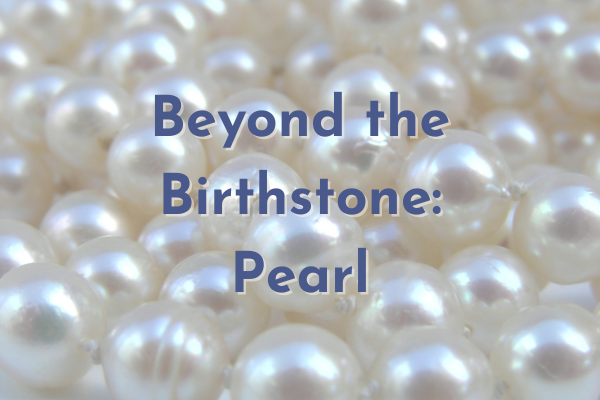
June's birthstone is the pearl — and it is, in one important respect, unlike every other entry in this series. A pearl is not a mineral. It is a biological material, produced entirely within a living organism. When an irritant enters the soft tissue of an oyster or mussel, the mollusk responds by secreting layers of nacre — a composite of aragonite crystals (a form of calcium carbonate) bound together by an organic protein called conchiolin — around the foreign object. Those layers accumulate over months to years, eventually forming a pearl. The popular story that pearls begin with a grain of sand is mostly myth: it is typically a fragment of mantle tissue or a parasite, not sand, that triggers the process.
What makes nacre scientifically interesting extends beyond how pearls look. Aragonite in pure crystal form is relatively brittle, rating just 3 to 4 on the Mohs scale. But the mollusk's layered brick-and-mortar architecture — microscopic aragonite platelets separated by thin sheets of conchiolin — produces a composite material that is, according to research published in ScienceDaily summarizing Berkeley Lab findings, roughly 3,000 times more resistant to fracture than the aragonite it is made from. No human-engineered composite outperforms its constituent materials by that margin. Materials scientists at institutions including Berkeley Lab and Beihang University have spent decades trying to understand and replicate nacre's hierarchical structure, with applications ranging from lightweight structural composites to bone implant materials to armor systems.
The mineral at the core of a pearl — calcium carbonate — is among the most widely used industrial materials in the world. At the industrial scale it appears not as nacre but as limestone, the sedimentary rock formed from the accumulated shells, skeletons, and carbonate deposits of ancient marine organisms. Limestone is quarried across 45 states; it is abundant, widely distributed, and deeply integrated into the supply chains of multiple major industries.
In construction, calcium carbonate is the primary raw material in cement and concrete. Of total domestic crushed stone produced in 2024, about 70% was limestone and dolomite, and an estimated 72% of crushed stone was used as a construction aggregate, mostly for road construction and maintenance, with 17% going to cement manufacturing. Roads, bridges, buildings, tunnels, and public infrastructure all depend on limestone-derived materials for structural integrity.
The largest single market for lime — quicklime and hydrated lime derived by heating limestone — is steelmaking. Lime acts as a flux in blast furnaces, binding impurities into slag and allowing them to be separated from molten iron. According to the USGS Mineral Commodity Summaries 2025, in 2024 an estimated 16 million tons of quicklime and hydrated lime was produced in the United States, valued at about $3.2 billion. Major markets in descending order of consumption were steelmaking, chemical and industrial applications, flue gas treatment, construction, water treatment, and nonferrous metal mining.
That flue gas treatment application deserves specific mention. Limestone-based calcium carbonate slurry is the primary reagent in wet flue gas desulfurization systems, which remove sulfur dioxide from industrial emissions at power plants and manufacturing facilities. The calcium carbonate reacts with sulfur dioxide to form calcium sulfate, preventing the SO₂ from reaching the atmosphere where it would contribute to acid rain. This is one of the most consequential environmental applications of any industrial mineral, operating at enormous scale across the U.S. and globally.
In paper, plastics, and coatings, precipitated calcium carbonate (PCC) — a refined, high-purity form — serves as a filler and functional additive. In paper manufacturing it improves brightness, opacity, and print quality while reducing equipment wear. In plastics and paints it improves surface finish, stiffness, and product consistency. These applications account for a significant share of chemical and industrial lime consumption tracked by the USGS.
In agriculture, lime products neutralize acidic soils, improving conditions for crop production and reducing the need for other soil amendments. In water treatment, calcium carbonate adjusts pH and alkalinity in both municipal drinking water systems and industrial wastewater treatment. The EPA identifies calcium carbonate as essential to water treatment chemical production, noting that U.S. resources are abundant and production is widely distributed across the country — characteristics that distinguish it from more vulnerable mineral supply chains.
In healthcare and consumer products, high-purity calcium carbonate appears as a dietary calcium supplement, an active ingredient in antacids, and a food additive. These applications require precise chemical composition and consistency — a different set of standards from construction aggregate, but derived from the same fundamental material.
Pearl is the only birthstone in this series produced by a living organism rather than geological processes. But the mineral compound it is built from — calcium carbonate — connects to some of the most foundational industrial supply chains in the modern economy: the steel in your city's buildings, the road beneath your car, the paper in your documents, the water from your tap. The pearl is a biological marvel. The mineral behind it is everywhere. Minerals make it happen.
September 30, 2026

September 25, 2026
August 27, 2026