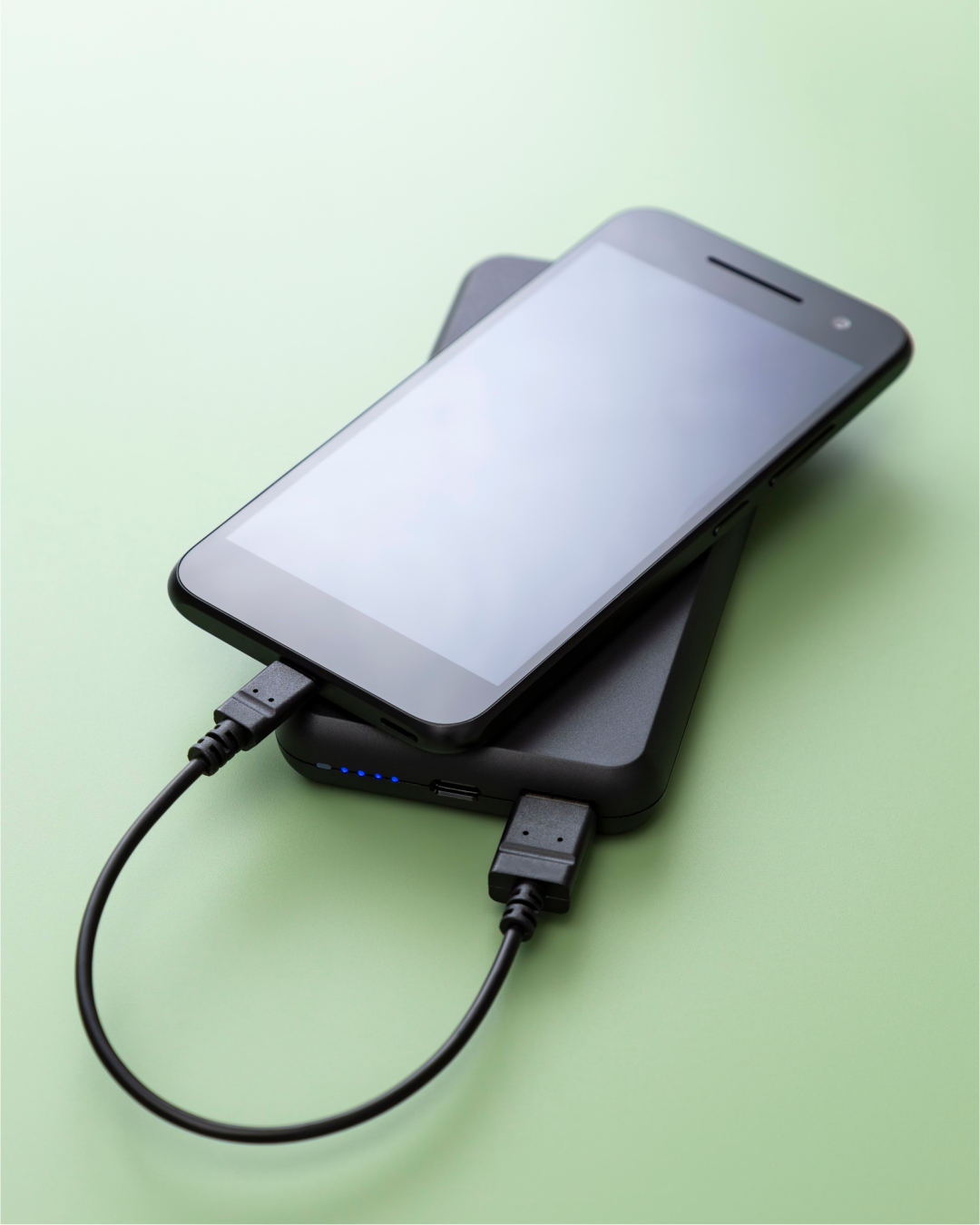
Rechargeable batteries are among the most mineral-intensive technologies in widespread commercial use. Regardless of battery chemistry, the electrochemical processes that store and release electrical energy are enabled by specific mineral inputs — at the cathode, anode, and electrolyte — whose physical and chemical properties determine performance, safety, longevity, and cost. As global demand for energy storage grows across transportation, consumer electronics, and grid-scale applications, the battery minerals supply chain has emerged as a matter of significant economic and geopolitical consequence. This paper surveys the principal rechargeable battery chemistries currently in commercial use or advanced development, identifies the mineral inputs central to each, and examines the supply chain implications that bear on industrial policy and domestic minerals production.
A battery is fundamentally an electrochemical system. Each cell consists of two electrodes — a cathode (positive terminal) and an anode (negative terminal) — separated by an electrolyte through which ions travel during charge and discharge cycles. When the battery discharges, ions migrate from the anode to the cathode, releasing electrons through the external circuit to perform work. When recharged, the process reverses. The mineral composition of these components — particularly the cathode active material and the anode — is the primary determinant of a battery’s energy density, cycle life, thermal stability, and material cost.
The commercial battery landscape encompasses several distinct chemistries. Lead-acid batteries, the oldest rechargeable technology in mass deployment, remain indispensable in automotive starting and backup power applications. Nickel-based chemistries, including nickel-cadmium (NiCd) and nickel-metal hydride (NiMH), served as the dominant rechargeable platform prior to the commercialization of lithium-ion technology. Today, lithium-ion batteries — themselves a family of related chemistries distinguished primarily by cathode composition — dominate transportation and consumer electronics applications. Emerging technologies including lithium iron phosphate (LFP), sodium-ion, zinc-based, and solid-state batteries are advancing at varying rates of commercial readiness. Each chemistry carries a distinct mineral profile with distinct supply chain implications.
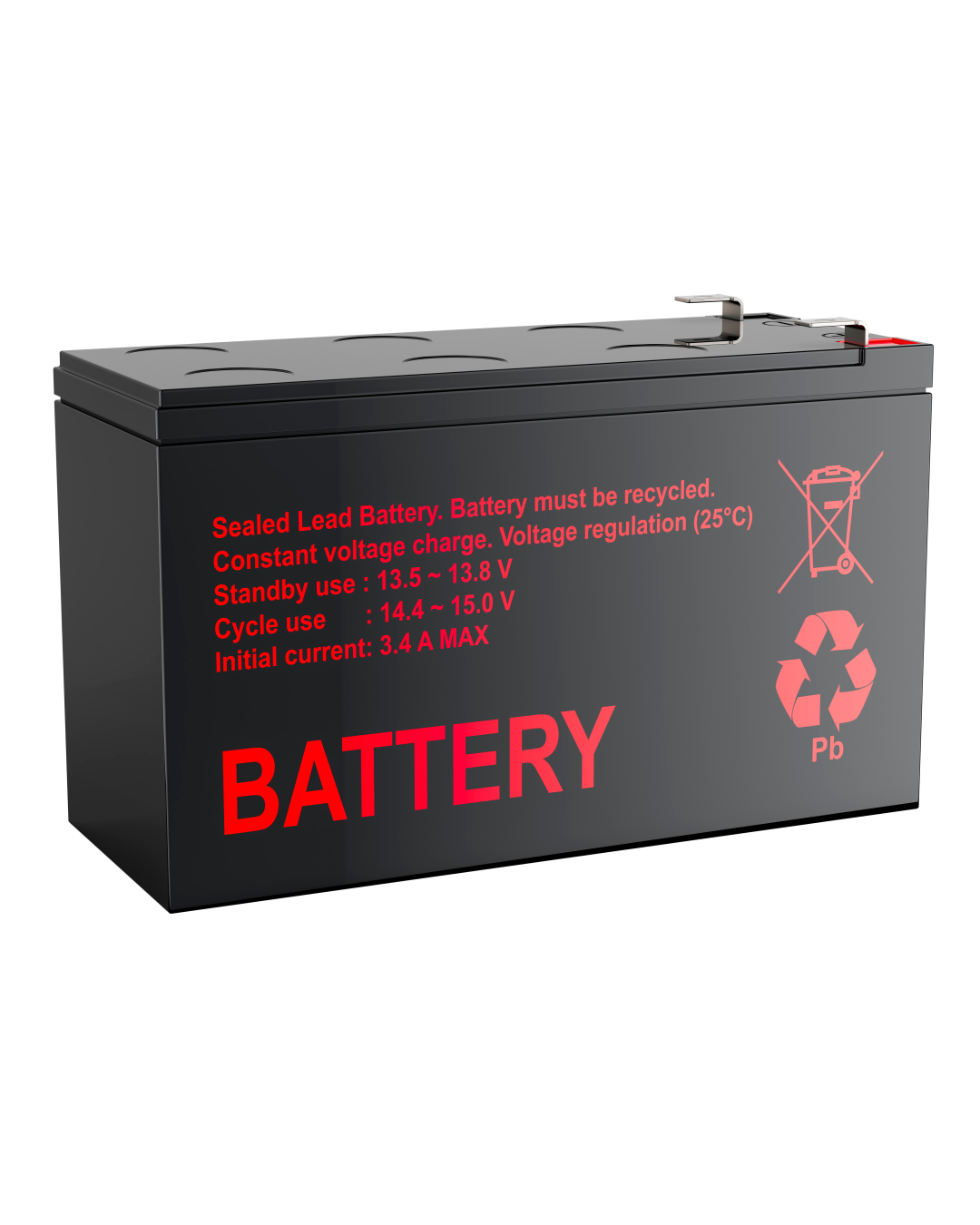
Lead-acid batteries, first developed in 1859, remain the most widely deployed rechargeable battery technology in the world by installed capacity. The electrochemical system employs lead dioxide (PbO₂) at the positive electrode, metallic lead (Pb) at the negative electrode, and a dilute sulfuric acid solution as the electrolyte. The central mineral input is lead.
Lead-acid batteries exhibit lower energy density than lithium-based alternatives — approximately 30 to 50 watt-hours per kilogram (Wh/kg) — but offer compelling cost, reliability, and recyclability advantages. The closed-loop recycling infrastructure for lead-acid batteries is among the most mature of any manufactured product; lead recovery rates from spent automotive batteries exceed 95 percent in the United States and Europe.¹ This high recyclability substantially mitigates the supply risk that attends other battery minerals.
Applications for lead-acid batteries include automotive starting, lighting, and ignition (SLI); uninterruptible power supplies; materials handling equipment; and, increasingly, hybrid and micro-hybrid vehicle systems. Despite competition from lithium-ion chemistries in newer applications, lead-acid technology retains a large and durable installed base owing to its low cost per kilowatt-hour and the established manufacturing and recycling infrastructure supporting it.
Prior to the widespread commercialization of lithium-ion technology, nickel-based rechargeable chemistries represented the state of the art in portable energy storage. Two variants remain in commercial use.
Nickel-cadmium (NiCd) batteries employ nickel oxide hydroxide as the cathode active material and metallic cadmium as the anode, with a potassium hydroxide aqueous electrolyte. NiCd batteries tolerate a wide operating temperature range, support high discharge rates, and exhibit long cycle lives. The toxicity of cadmium has, however, restricted its use in many consumer markets under regulatory regimes including the European Union’s Battery Directive.
Nickel-metal hydride (NiMH) batteries replaced cadmium with a hydrogen-absorbing metal alloy anode, typically composed of rare earth elements — principally lanthanum and cerium — combined with nickel, cobalt, manganese, and aluminum. NiMH technology became the dominant chemistry in first-generation hybrid electric vehicles and remains widely used in this application. The Toyota Prius, which entered production in 1997, relied on NiMH battery packs through multiple generations. The energy density of NiMH batteries — approximately 60 to 120 Wh/kg — is substantially lower than that of lithium-ion alternatives, which ultimately drove the industry transition to lithium-based systems.²
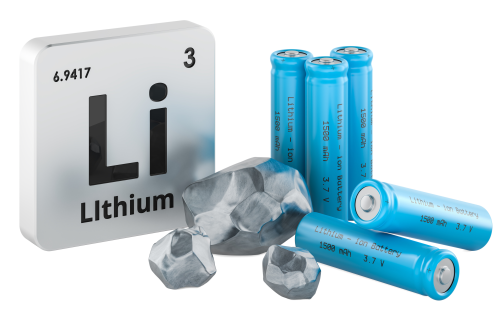
Lithium-ion batteries now constitute the dominant rechargeable technology across electric vehicles, consumer electronics, and stationary grid storage. A conventional lithium-ion cell consists of a lithium-containing transition metal oxide cathode, a graphite anode, and an organic electrolyte containing a dissolved lithium salt.³ The movement of lithium ions between electrodes during charge and discharge cycles generates the electrical current that powers the connected device or system.
The five critical minerals central to most lithium-ion battery chemistries are lithium, nickel, cobalt, manganese, and graphite.⁴ Their respective roles are as follows:
Lithium functions as the charge-carrying ion. As the lightest metal on the periodic table, lithium supports exceptionally high voltage and energy storage per unit of mass, making it uniquely suited to applications where weight and volume are constrained. Global lithium reserves were estimated at approximately 105 million metric tons as of 2024, with the majority residing in continental brine deposits — notably the salt lakes of Argentina, Bolivia, and Chile.⁵ A typical electric vehicle battery pack contains approximately 9 kilograms of lithium.⁶
Nickel is the principal cathode constituent by mass in high-energy-density lithium-ion chemistries. Higher nickel content in the cathode correlates with increased energy density, directly extending the driving range of electric vehicles. In some nickel-cobalt-aluminum (NCA) and nickel-manganese-cobalt (NMC) cathode formulations, nickel accounts for up to 80 percent of cathode weight.⁷ A typical EV battery contains approximately 40 kilograms of nickel.⁶
Cobalt serves a stabilizing function in the cathode, suppressing thermal runaway and extending cycle life. It is also the most geopolitically sensitive mineral in the lithium-ion supply chain. The Democratic Republic of the Congo supplies the majority of the world’s cobalt, a country with a documented record of internal conflict, human rights violations, and environmental concerns associated with mining operations.⁸ These conditions have accelerated industry interest in cobalt-reduced and cobalt-free battery chemistries.
Manganese functions alongside cobalt as a cathode stabilizer, contributing to structural integrity and thermal safety. In NMC formulations, cobalt and manganese together moderate the elevated reactivity associated with high-nickel cathodes.⁹ A typical EV battery contains approximately 25 kilograms of manganese.⁶
Graphite is the dominant anode material across virtually all commercial lithium-ion chemistries, valued for its cost, abundance, and stable cycling behavior.⁹ Natural graphite supply is heavily concentrated in China, which has recently imposed more stringent export licensing requirements on the mineral.⁸ Synthetic graphite, produced from petroleum coke, is used as an alternative in some applications. A typical EV battery contains approximately 66 kilograms of graphite — the single largest mineral input by mass.⁶
Within the lithium-ion family, nickel-manganese-cobalt (NMC) and nickel-cobalt-aluminum (NCA) have been the historically dominant cathode chemistries in the North American and European electric vehicle markets.
NMC batteries incorporate lithium, nickel, manganese, and cobalt in the cathode in varying ratios. The naming convention reflects cathode stoichiometry: NMC 622, for example, contains nickel, manganese, and cobalt in a 6:2:2 molar ratio. Higher nickel ratios, such as NMC 811, improve energy density at the cost of reduced thermal stability, requiring more sophisticated battery management systems. NMC batteries accounted for 72 percent of batteries deployed in electric vehicles outside China as of 2020.⁹
NCA batteries substitute aluminum for manganese in the cathode. The chemistry was commercially developed in part through collaboration between Panasonic and Tesla and remains the basis for high-performance EV battery packs. Aluminum’s role in the cathode is structural — it stabilizes the layered oxide lattice at high states of charge — and the mineral’s abundance and low cost make it an attractive cobalt-reducing additive.
Lithium iron phosphate (LFP) batteries represent the most significant shift in EV battery chemistry in recent years. LFP cathodes substitute iron and phosphate for the nickel, cobalt, and manganese of NMC chemistries. As of 2024, LFP batteries supply nearly half of the global electric car market, up from less than 10 percent in 2020.¹⁰
The LFP cathode chemistry was first identified as viable for lithium-ion applications in 1996.¹¹ The strong phosphate-oxygen covalent bonds in the olivine crystal structure confer exceptional thermal and structural stability — LFP batteries are substantially less prone to thermal runaway than NMC alternatives — and an extended cycle life. Under standard conditions, LFP cells support more than 3,000 charge-discharge cycles; under optimal conditions, more than 10,000 cycles. By comparison, NMC batteries typically support 1,000 to 2,300 cycles.¹¹
The tradeoff is energy density. LFP cells exhibit specific energy of approximately 170 Wh/kg at the cell level — well below the 260 Wh/kg achievable with high-nickel NMC cathodes.¹² This reduced energy density results in lower driving range per unit of battery weight, a limitation that has constrained LFP adoption in premium long-range EV applications, though ongoing development has narrowed the gap.
LFP batteries carry a meaningful cost advantage. Cell-level costs for LFP are approximately 30 percent below those of NMC or NCA batteries.¹³ This cost differential, combined with safety and longevity advantages, has driven adoption in mass-market EVs, commercial fleet vehicles, and stationary grid storage. A notable supply chain concern is geographic concentration: as of 2024, over 98 percent of LFP cathode material and LFP battery cell production capacity is located in China.¹⁰
The LFP supply chain introduces a distinct set of mineral inputs relative to NMC. Key among them is phosphate rock, which must be refined to battery-grade purified phosphoric acid (PPA) — a processing step that is itself heavily concentrated in China. The International Energy Agency has identified a potential deficit in battery-grade PPA supply as early as 2030 without investment in new processing capacity outside China.¹⁰ Battery-grade manganese sulfate, used in an evolving LFP variant that incorporates manganese (LMFP) to improve energy density, faces similar supply chain constraints, with China currently accounting for approximately 95 percent of global production.¹⁰
Sodium-ion (Na-ion) batteries substitute sodium for lithium as the charge-carrying ion, leveraging the chemical similarity between the two alkali metals. Sodium is the sixth most abundant element in the earth’s crust and is globally distributed, with no concentration risk analogous to lithium, cobalt, or graphite. Sodium carbonate (soda ash) — a primary feedstock for sodium-ion battery production — traded below $1 per kilogram as of 2019, compared to approximately $13 per kilogram for lithium.¹⁴
The primary limitation of sodium-ion technology relative to lithium-ion is energy density. Sodium’s higher atomic weight, larger ionic radius, and lower standard electrode potential result in specific energy output of approximately 100 to 150 Wh/kg — below that of most lithium-ion chemistries.¹⁵ This performance gap limits near-term sodium-ion applicability in weight-sensitive mobile applications.
The characteristics of sodium-ion batteries — lower cost, improved intrinsic safety, longer useful life, and reduced dependence on critical minerals — position the technology favorably for stationary grid storage and heavy transport applications, including maritime and trucking, where energy density per kilogram is less constraining than in passenger vehicles.¹⁵ From a domestic supply chain perspective, sodium-ion represents a meaningful opportunity: the United States and Europe already play significant roles in soda ash and caustic soda production, two key upstream inputs, providing a foundation for a more domestically anchored battery supply chain relative to lithium-based chemistries.¹⁰
Cathode materials for leading sodium-ion chemistries include layered transition metal oxides — which require manganese — and Prussian blue analogs. The hard carbon materials used in Na-ion anodes are produced from biomass, another supply chain input with potential for domestic sourcing.¹⁰
Zinc-based battery chemistries have attracted renewed research and commercial interest as candidates for low-cost, safe grid storage applications. Zinc is inexpensive, globally abundant, non-toxic in the quantities used in batteries, and already produced at industrial scale for a wide range of applications including galvanizing and industrial chemicals.
Zinc-manganese oxide batteries — a rechargeable analog to the conventional alkaline dry cell — pair a zinc metal anode with a manganese oxide cathode in an aqueous electrolyte. This chemistry avoids the flammability risks associated with the organic electrolytes used in lithium-ion batteries and can be manufactured from commodity materials at potentially very low cost. Zinc-air batteries pair a zinc anode with an air cathode that reduces oxygen during discharge, offering high theoretical energy density; however, rechargeable zinc-air systems face ongoing technical challenges related to zinc dendrite formation and electrolyte degradation that have constrained commercial deployment.
As a broader trend, researchers pursuing next-generation grid storage chemistries have increasingly prioritized earth-abundant mineral inputs. Most new battery chemistries under active development use materials such as zinc, magnesium, manganese, sodium, and lead — with relatively few relying on resource-constrained minerals.¹⁶
Solid-state batteries replace the liquid organic electrolyte of conventional lithium-ion cells with a solid ionic conductor — typically a ceramic, glass, or polymer material. This architectural change eliminates the flammability risk associated with liquid electrolytes and enables the use of lithium metal anodes, which store significantly more energy per unit of mass than graphite anodes and could substantially increase cell-level energy density.
The solid electrolyte materials under investigation include lithium superionic conductors (LISICON), garnet-type oxides, sulfide-based glasses, and polymer electrolytes, each with distinct processing requirements and mineral inputs including lithium, lanthanum, zirconium, and sulfur. Silicon is being developed as an anode material in conjunction with solid electrolytes, exploiting silicon’s theoretical lithium storage capacity — approximately ten times that of graphite — while using the solid electrolyte to manage the volumetric expansion that has limited silicon anode performance in conventional liquid-electrolyte cells.
Solid-state batteries remain in pre-commercial development for most high-performance applications. Manufacturing challenges — including the difficulty of forming low-resistance solid-solid interfaces between cell components at scale — have extended development timelines. Substantial investment from automotive OEMs and battery manufacturers reflects the potential of the technology, and initial commercial deployment in specialized or premium applications is anticipated in the latter part of the 2020s.
The aggregate demand trajectory for battery minerals is large and accelerating. In a scenario aligned with international climate commitments, demand for minerals used in EV and stationary battery storage applications is projected to grow at least thirty times by 2040. Lithium demand is projected to grow over forty times; graphite, cobalt, and nickel demand by approximately twenty to twenty-five times over the same period.¹⁷
This demand profile creates significant supply chain risk. Extraction of cobalt and natural graphite is each concentrated in a single country supplying over 70 percent of global output.⁸ China controls the majority of global processing capacity for cobalt, lithium, manganese, and graphite — at some points in the supply chain, Chinese processors account for 70 to 90 percent of global refined material output.¹⁸ This concentration creates price volatility risk, supply disruption risk, and strategic dependency for manufacturers in the United States and allied economies.
The domestic minerals industry has a central role to play in addressing this challenge. Expanding extraction and processing capacity for battery minerals within the United States — lithium, nickel, graphite, manganese, and the phosphate inputs required for LFP chemistries — reduces dependence on foreign supply chains and strengthens the economic and national security foundations of the energy storage sector. For sodium-ion battery development, the United States’ existing industrial base in soda ash production, centered in Wyoming, provides a domestically available feedstock with minimal geographic concentration risk.
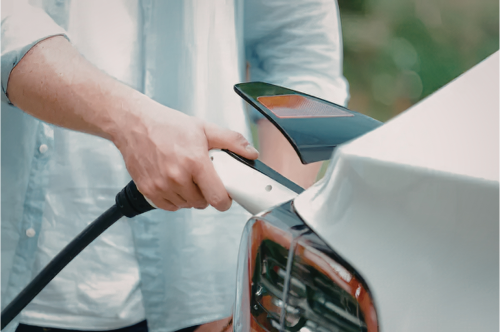
Each major rechargeable battery chemistry embodies a distinct mineral portfolio. Lead and sulfuric acid underpin the lead-acid systems found in virtually every conventional vehicle. Nickel and rare earth elements define the NiMH batteries that power hybrid vehicles. Lithium, nickel, cobalt, manganese, and graphite are the foundational minerals of the NMC and NCA lithium-ion batteries that dominate electric vehicles and consumer electronics. Iron, phosphate, and lithium define the rapidly growing LFP chemistry that now supplies nearly half the global EV market. Sodium and manganese define the emerging sodium-ion chemistry positioned for grid storage applications. Zinc and manganese undergird promising near-term alternatives for stationary storage. The aggregate demand for these minerals is projected to grow by multiples over the coming decades as electrification expands across the global economy.
The minerals industry — through responsible domestic extraction, investment in processing infrastructure, and support for supply chain diversification — is foundational to the battery technologies that will define the energy system of the 21st century.
Each major rechargeable battery chemistry embodies a distinct mineral portfolio. Lead and sulfuric acid underpin the lead-acid systems found in virtually every conventional vehicle. Nickel and rare earth elements define the NiMH batteries that power hybrid vehicles. Lithium, nickel, cobalt, manganese, and graphite are the foundational minerals of the NMC and NCA lithium-ion batteries that dominate electric vehicles and consumer electronics. Iron, phosphate, and lithium define the rapidly growing LFP chemistry that now supplies nearly half the global EV market. Sodium and manganese define the emerging sodium-ion chemistry positioned for grid storage applications. Zinc and manganese undergird promising near-term alternatives for stationary storage. The aggregate demand for these minerals is projected to grow by multiples over the coming decades as electrification expands across the global economy.
The minerals industry — through responsible domestic extraction, investment in processing infrastructure, and support for supply chain diversification — is foundational to the battery technologies that will define the energy system of the 21st century.